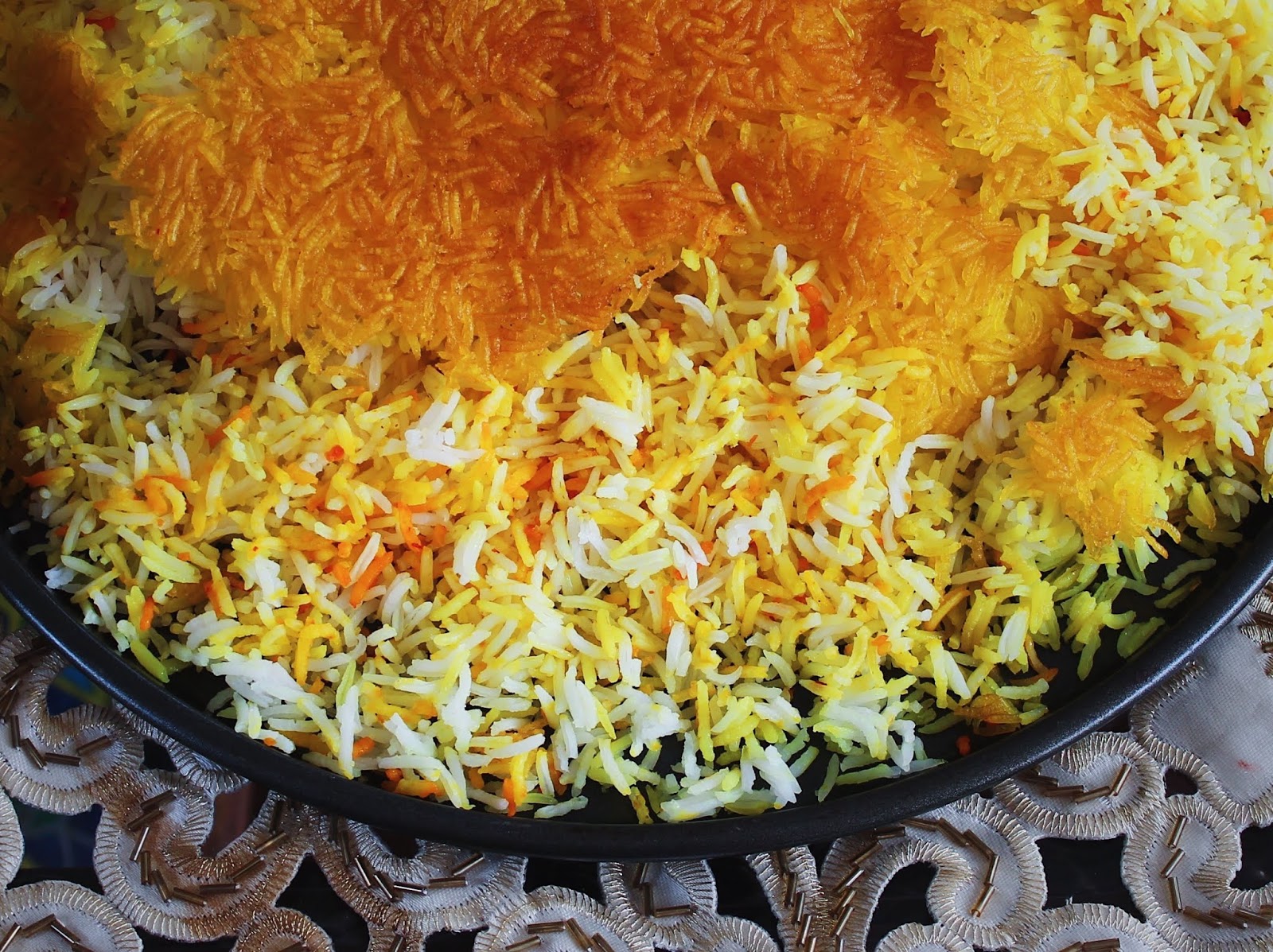
Rice Tahdig
This unplanned post came about thanks to a reader's question about tahdig. She asked: "Is there something I can do to get a better crust?" Great question! I've been blogging about Iranian food for months now, but it never occurred to me to write about tahdig, the most delicious and sought-after part of a rice dish. If tahdig could speak, it would probably say, "I get no respect!" I realize I've neglected a precious and very important part of Persian cuisine. In Persian (Farsi), "tah" means bottom, and "dig" means "pot." ته دیگ Tahdig refers to the crunchy and crispy bottom layer of rice cooked in a pot. So tahdig literally translates to "bottom of the pot."
This crunchy, golden layer forms through a perfect symphony of the right temperature, the right amount of oil, aromatic rice, cooking time, the proper pan, a bit of experience, and a good deal of patience. If you don't quite right the first time, don't worry, there's always the next pot of rice dish to practice with. Rice is the heart of Iranian cooking, and that's how we've learned, over generations, to master the art of tahdig. As the saying goes, "practice makes perfect!" And if it's any consolation, even seasoned cooks sometimes falter.


There are many kinds of tahdig. The most well-known is rice tahdig. But there are others just as delicious. There's potato tahdig, which pairs wonderfully with rice and chicken dishes. If you decide to line the bottom of the pan with potato slices, cut them evenly and not too thin, and layer them neatly. Sprinkle a dash of salt after layering them, wait for a few minutes till they are a little bit fried, then turn them over, pour the rice over the potatoes, let them fry for a few minutes until golden, then turn them over before adding the rice. From there, follow the same steps as for rice tahdig. Another popular version is bread tahdig. Any kind of flatbread, such as lavash or pita, can be used. I've even had lettuce tahdig, and it's very delicious. Then there's the very tasty macaroni tahdig, a fantastic combination of crispy noodles, fresh tomatoes, and flavorful meat sauce.
Rice and Tahdig
Ingredients
Serves 4-6
-2 1/2 cups long-grain white basmati rice
-Butter or olive oil
-1/2 teaspoon powdered saffron dissolved in 4 tablespoons of hot water
Salt
Method
Ingredients
Serves 4-6
-2 1/2 cups long-grain white basmati rice
-Butter or olive oil
-1/2 teaspoon powdered saffron dissolved in 4 tablespoons of hot water
Salt
Method
- In a large bowl, wash the rice with cool water several times to remove excess starch.. Soak in 6 cups of water, add 3-4 tablespoons of salt, and set aside for 1 hour.
- In a large non-stick pot with a tight-fitting lid, bring 6 cups of water to a rapid boil on medium-high heat.
- Drain the soaked rice and add it to the boiling water, cook for about 7 minutes or until the grains are long, soft on the outside but firm in the center. Drain in a fine-mesh strainer and rinse with cool water.
- Place the empty pot back on the stove over medium heat. Add 3-4 tablespoons of oil and 2 tablespoons of liquid saffron, swirling the pot or using a wooden spoon to coat the bottom evenly.
- Gently return the parboiled rice to the pot, shaping it into a loose pyramid shape away from the sides.
- Using the handle of a wooden spoon, make 4-5 holes in the rice to help the steam escape.
- Wait for about 5-7 minutes until steam begins to rise.
- Add a few cubes of butter on top or pour 2-3 tablespoons of oil mixed with 2-3 tablespoons of water. cover, and cook on medium-low heat for 45-50 minutes.
- To prevent the moisture from dripping back into the rice, cover the lid with a kitchen towel or 2-3 layers of thick paper towels. In Iran, special fabric lid covers are made just for this purpose. I highly recommend using one for the perfect tahdig.
The only problem? There's never enough tahdig to go around! Being the fifth kid out of six children, I remember all too well what it was like growing up, everyone fighting over the last crunchy piece of tahdig at the dinner table. Consider it preparation for life!
Enjoy!